
AI Strategy Session
Use this when you need clarity before committing to a project, app, workflow, or buildout.
AI Implementation Projects
I help business owners, consultants, creators, and leaders turn AI ideas into practical assets: full-stack AI app prototypes, internal tools, workflows, content systems, assessments, training materials, and client-facing experiences.
Strategy matters, but eventually someone has to build the thing. That is where many AI efforts stall. The idea is interesting. The tools are available. The team is curious. But the actual project still needs structure, writing, workflow design, prompt development, database logic, user experience decisions, human review, and enough polish to use in the real world.
AI Implementation Projects are for people who need a skilled partner who can understand the business problem, shape the experience, build the materials, and create a working product or prototype.
Where this fits
When the work involves building a usable app, tool, platform, database-backed prototype, or client-facing system, it belongs under AI Implementation Projects. Project Work & Hourly can cover smaller fixes, troubleshooting, feature refinement, and short support blocks. But the main service home for full-stack AI app development is this page.
That keeps the service ladder clear. Strategy helps decide what to build. A workflow review helps find where AI belongs. An implementation project builds the working thing.
Use this when you need clarity before committing to a project, app, workflow, or buildout.
Use this when you need to study a process before redesigning or automating part of it.
Use this when you need a page, workflow, prototype, tool, app, course, report system, or client-facing experience built.
Why project work
Many leaders know enough to be interested in AI, but not enough to turn that interest into usable business assets. The work often gets stuck between enthusiasm and implementation.
You may have a good idea for an app, tool, course, workflow, funnel, chatbot, lead magnet, assessment, or content system. But to make it useful, someone has to shape the audience, structure the experience, write the copy, define the AI behavior, design the data flow, decide what humans review, and turn the concept into something people can actually use.
You know what you want, but not how to build it.
The idea is clear enough to explain, but the execution still feels fuzzy.
Your app idea needs more than a prompt.
You need user flow, database structure, AI instructions, input handling, review points, and a working interface.
Your workflow has too many manual steps.
You need repeatable prompts, review steps, templates, automations, and processes that reduce friction.
Your team needs an example they can copy.
A working prototype often teaches better than a long explanation.
My approach
I do not treat implementation as a purely technical task. A useful AI project has to fit the business, the audience, the workflow, and the people who will receive or use the output.
That means I bring together AI fluency, writing, teaching, publishing, assessment design, curriculum development, WordPress/LMS experience, full-stack app prototyping, and temperament-based communication. The result is not just faster output. The result is more usable output.
The project should connect to real people, not just produce more content or another unused tool.
The project should have clear inputs, steps, outputs, data flow, review points, and ownership.
The project should solve a business problem that is worth solving and support decisions you can defend.
The project should produce something you can test, publish, train, launch, or use.
Project types
These are examples, not limits. The right project depends on your audience, your current tools, your business model, and how much of the work you want to do yourself.
Build lightweight AI-enabled apps, internal tools, dashboards, assessment platforms, client portals, or working prototypes using tools such as Google AI Studio, Firebase, Firestore, authentication, APIs, and modern web technologies.
Turn a vague offer into a clearer page, campaign, pitch, or sequence that speaks to different buyer concerns.
Build a repeatable process for creating articles, newsletters, scripts, social posts, podcasts, or course content.
Create an entry experience that helps prospects learn something useful while giving you better insight into their needs.
Turn expertise into teachable modules, facilitator guides, participant materials, activities, prompts, and job aids.
Give your team reusable prompts, examples, review steps, and operating routines for common business tasks.
Build personalized reports, recommendations, onboarding guides, coaching prompts, or client-facing content.
Create or improve the web pages, course structures, gated resources, content flows, and platform pieces needed to support the AI project.
Full-stack app development
Some AI projects should not end as a document, prompt list, or slide deck. They need to become a working application: something a user can open, complete, submit, review, save, retrieve, or share.
That is where full-stack AI app development fits. The goal is usually not to build a giant enterprise system on day one. The goal is to build a clear, usable version of the tool that proves the workflow, serves real users, and gives you something concrete to improve.
The strongest use case is a practical application tied to your knowledge, content, training, assessment model, client workflow, or internal process. I am especially useful when the app needs both technical structure and careful human-facing language.
The human fit
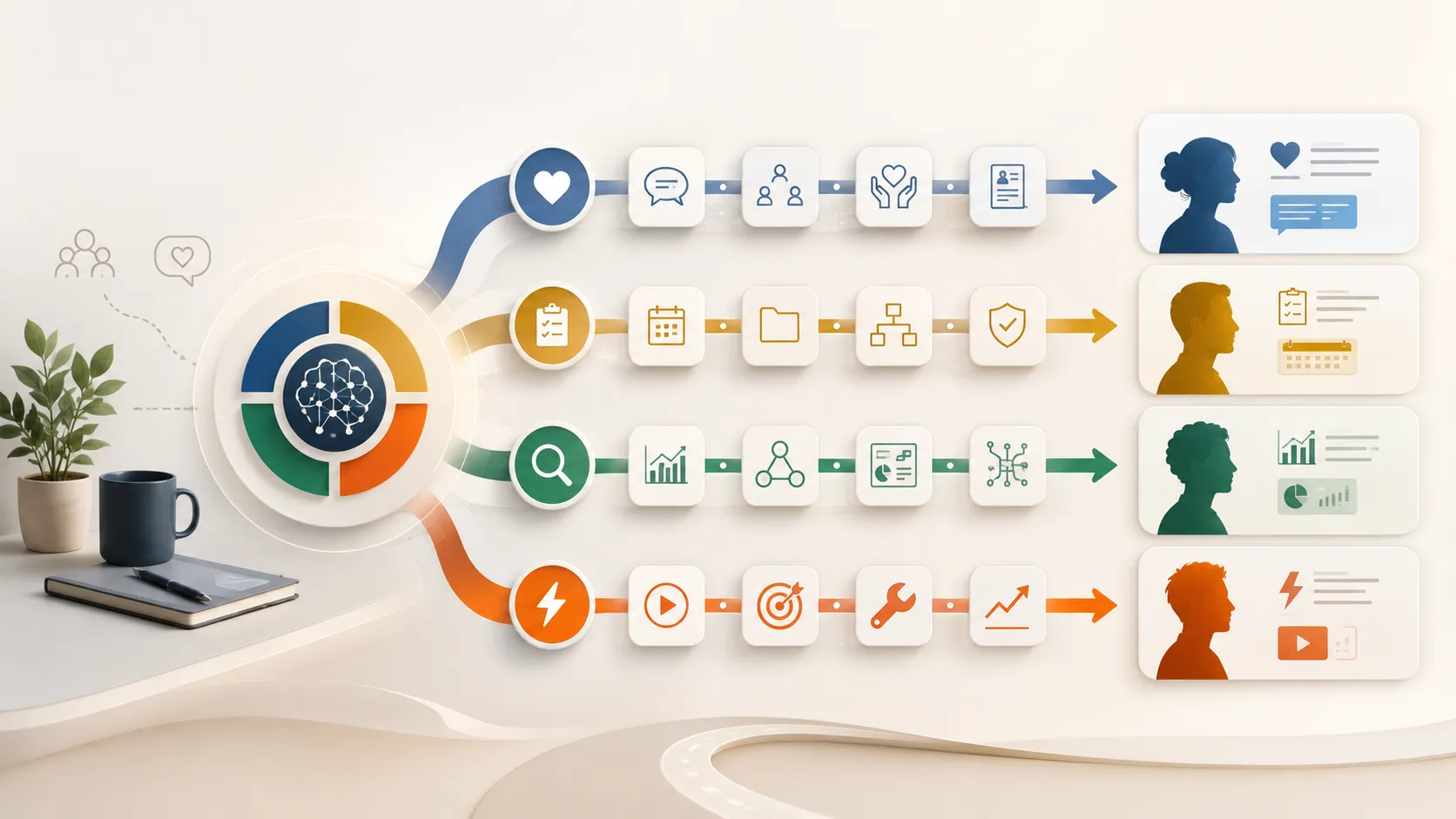
A landing page, app, course, workflow, or AI report can be technically correct and still miss the reader. That is why I build with temperament in mind. The goal is to help different people find a doorway into the same useful project.
Does the project preserve meaning, care, trust, and human connection?
Does the project create structure, clarity, reliability, and a usable process?
Does the project make sense, improve quality, and solve the right problem?
Does the project create traction, options, speed, and visible payoff?
How projects work
Each project is scoped around the outcome. Some projects are small and focused. Others become phased buildouts. Either way, the work needs clear expectations.
We define what you want built, who it serves, what problem it solves, and what “usable” means.
We decide the deliverables, timeline, inputs, review process, platform needs, data needs, and what is inside or outside the project.
We map the user flow, content flow, prompt behavior, database needs, review points, and human decision points.
I create the copy, structure, prompts, workflows, materials, interface pieces, or app logic needed for the project.
We improve the deliverable based on your feedback, audience needs, quality standards, technical constraints, and practical use.
The project is organized so you can publish it, present it, train from it, test it, launch it, or hand it to the next person in the process.
Examples
The deliverable should be concrete enough that you can point to it, use it, test it, or give it to someone else.
A web-based assessment or quiz with user inputs, scoring logic, database storage, personalized results, and AI-assisted feedback.
A guided intake experience that gathers user information, stores responses, and produces useful recommendations or next-step summaries.
A practical guide with role-specific prompts, sample outputs, quality checks, and approved use cases for the team.
A course map, module structure, learning activities, facilitator guide, participant handouts, and AI-supported content workflow.
A report structure that turns intake or assessment data into useful explanations, recommendations, and next steps.
A repeatable system for turning long-form ideas into articles, newsletters, social posts, scripts, and podcast materials.
Fit
You have a business idea, app concept, content need, workflow problem, training goal, or client experience that needs to be built.
You want AI used with human judgment, not pasted into your business without thought.
You need someone who can write, organize, teach, prompt, structure, and think about the user experience.
You are willing to provide business context, source material, examples, feedback, and practical constraints.
You want a one-click automation that requires no human review, judgment, testing, or responsibility.
You want guaranteed revenue, rankings, viral growth, or business results from a single deliverable.
You are not ready to make decisions, provide feedback, or clarify what the project is supposed to accomplish.
You need highly regulated legal, medical, financial, or compliance work without the right professional review.
Common questions
Not always, but it is often the cleanest starting point if the project is not already well-defined. If you already know exactly what you need built, we can discuss the project directly.
Yes, when the scope fits. I can help build lightweight full-stack AI applications, internal tools, assessment platforms, database-backed prototypes, client-facing tools, and workflow apps using tools such as Google AI Studio, Firebase, Firestore, authentication, APIs, and modern web technologies. Larger enterprise systems may require a larger development team or specialist support.
No. Project Work & Hourly is best for smaller tasks, review, troubleshooting, cleanup, or focused support. AI Implementation Projects are better when the work has a larger deliverable, such as a prototype, app, workflow system, assessment tool, course buildout, or client-facing experience.
Yes. Existing articles, books, courses, slides, transcripts, emails, reports, assessments, data structures, or workshop materials can often become the raw material for an AI-supported project.
That is the goal. AI can make content faster, but the work still needs your voice, judgment, expertise, and audience fit. I can help build prompts, examples, and review standards that preserve your point of view.
Project work is scoped based on deliverables, complexity, timeline, source material, technical requirements, platform needs, and the amount of review or collaboration needed. A strategy session or brief project discussion is usually the best way to define a realistic budget.
Yes. A project can stand alone, or it can lead to monthly support if you need ongoing strategy, implementation, content review, workflow refinement, prompt system development, or product improvement.
Start here
If you already know what you want built, contact me about the project. If you need help deciding what to build first, start with an AI Strategy Session.